Saturday, January 2, 2010

Hebron: A City Strangled by Occupation


The more I think of how to explain Hebron to you, the more I realize it is truly impossible to describe what goes on here. This stunningly beautiful city is currently the most violent location in Palestine. The city is split in two parts H1 & H2. Palestinian controlled H1 is a noisy, bustling center. Merchants and food venders yell loudly as honking taxis pass by, but as you make your way toward H2, the occupied old city, things quickly start to change. The number of people in the streets drops dramatically, and you will notice more closed and barred shut shops. Further down the path you find almost all stores closed. Only a few families living under intense poverty conditions try to make a living here. They sell their goods to the few tourists that dare enter the city and they make a maximum of $3 a day to feed their family with.

One of the first things I do when entering an unknown area is to walk around and get a feel for my surroundings. However, walking around in Hebron is no simple task; dotted with over 100 checkpoints movement becomes increasingly difficult. It is wise to walk against the walls and under the canopies here to avoid being pelted with objects (trash, rocks, urine, feces) from settlers above, who have taken control of the houses and streets. The illegal settlements have military outposts on rooftops and snipers to protect the occupants. Water is only imported to the city once every three weeks. The water pipes are controlled by the Israeli government who regularly cut the water supply to all Palestinian families for weeks.

I get hassled much less Palestinians, no one attempts to hide the racism or hatred here; there is no need to. The soldiers, who routinely humiliate the citizens of Palestine, can make moving around the city mildly annoying or impossible by closing a checkpoint or detaining people for no reason and for any amount of time.

Sometimes it is quite obvious the soldiers are just bored and get a kick out of making people suffer. I witnessed a group of soldiers detaining several Palestinian teenagers. While the military looked on and laughed, the teens were forced to stand in a circle, sing and dance to, the Israeli national anthem.

In the Jewish-Only H2 neighborhood soldiers are the only people you will see on otherwise abandoned street corners. Most walls and doors are covered with graffiti and almost all have the Star of David on them (this is done by both the IDF and settlers). I spoke with a Palestinian man about the area and he explained “it's a ghost town, but they don’t want to tell you who the ghosts are.”

With physical violence and humiliation also comes a sometimes hopelessly crushing feeling of not knowing what lies in the future. Psychological warfare is a main tactic progressively pushing insanity on the Arab inhabitants. As I write this I can’t truly explain or describe what it is like living under occupation in this city. Photographing resistance fighters in other regions in the West Bank is different than in Hebron, here every Palestinian is a resistance fighter. They may not pick up a gun or throw stones but every day is a fight for life.

Witnessing this occupation can be difficult beyond anything I imagined before I got here. Coming from the U.S. I am not unaware of racism, but seeing it so proudly displayed here sickens my soul. Yet even with all the horrific events I see, I still find myself smiling at times, this is because of the children of Palestine. Their smiles and welcoming attitudes lift my spirits, when I am with them all of the pain I feel and sacrifices I have made make sense, and those feelings pale in comparison to the hope I have that these children will be free and able to determine their own future without humiliation or imprisonment.

A Israeli military sign outside of an outpost. H2, Hebron.
    A military patrol passes an elderly Palestinian man. Old city, Hebron.
      Palestinian waiting at a check point to the Abraham mosque (H2).
  Nightly military patrol, Old City.
Forcefully closed Palestinian neighborhood now Jewish only, H2.

      Looking over Hebron from inside an Israeli bunker.
Peace sign from an Israeli lookout station.
A woman being denied passage into the Jewish only section on Hebron.
    A child being interrogated during a night patrol.
A small girl in a stare down with  soldier, Old City.
Child doing backflips off a wall after school lets out.

        Handprints of kids paint a Palestinian house.

Thursday, December 17, 2009

Leaving for Gaza

Next week I will be leaving the occupied West Bank and will be heading south in attempts to enter the Gaza Strip. As most of the world knows, Gaza is an epicenter for the Palestinian struggle and is still trying to recover from the most recent war exactly one year ago. The ‘War on Gaza’ that happened last year was the event that pushed me to begin my work here in the occupied territories and it has been a very long and trying year. I would like to send my greatest thanks to those who have supported my work; your encouragement has kept up my spirits and led me to do great things.


The majority of my trip has been funded by myself (welcome to the life of an independent photojournalist) and for those who have donated to me and given financially support, I owe the greatest of debts. However, since my journey began nearly 3 months ago my money is staring to run low and is only continuing to dry up. The cost of travel and my work does take funds and this trip to Gaza is no easy task so I taking this time to reminding people that the my work as an independent can only be possible from supporters such as yourself.


If you are interested in donating or continuing your support please feel free to do so by clicking on the ‘Donate’ button. Every bit counts and there is NO donation that is to small! Please help support my work in Palestine and my future work in Gaza.

Sunday, December 13, 2009

Toulkarem Refuge Camp

Posters and paintings of martyrs plaster almost every wall as you enter what is obviously Toulkarem refugee camp. Bullet holes and tank shells still paint the buildings from the 2nd Intifada. This camp holds around 25,000 people and is one of two camps outside of Toulkarem city. Streets are only slightly wider than shoulder width. Several families cram together and live in rooms as small as 14’ - 10’, which makes canned sardines look free range. Like refugee camps all over the world, there is no guarantee of safety or a future for its inhabitants. These are a few photographs of their life and the world they live in.


A building peppered with bullet holes from the 2nd Intifada.


A boy walks past a war torn wall.


The hand prints of a child smeared on an alley street.


A woman passes the day sitting on a street corner.

Wednesday, December 9, 2009

I Wonder...

Child martyr graves from the 2nd Intifada, Jenin refuge camp

*This was a personal e-mail that I wrote to a good friend of mine. She recommended that I post it and share with everyone.*


I am writing this to you now with numb fingers and toes from a dark room with no electricity and crumbling walls. The desert winter has struck and once again the sky is crying and screaming with the voice of thunderclaps. I have been in Palestine for 2 months now and I am exhausted both physically and mentally. My brain feels soft and my thoughts are less focused while my body stiffens and begins to weaken and deteriorate like a rock against an angry sea. The only thing that is keeping me going is what got me here in the first place, my heart. My heart continues to speak to me every day feeding my soul and renewing my passion for life and struggle. It has brought me here this far on this amazing journey and has made me into the person I am today (without sounding to egotistical... I believe I’m pretty amazing). 


When I left home everyone told me that I would see a new world and become a whole new person. At first I rejected these statements when I began my work here. In fact, at times, I even became a little angry with these comments. In my eyes I was the same person. I have always had an activist mind set, I have always followed my heart and it seemed like I was just the same amazing kid now with more experience. It has become clear to me now that I was wrong.


I never thought I would have done the things that I have done here. To accomplish so much, gain so little and be happy with that result. I never thought I would stand between a child and a soldier’s gun nor did I think that I would make the judgment calls that I have. The sounds of grenades go off around you, the snaps of pullets fly by in the air while people are running from the waves of tear gas. In front of you is a teenager lying on the ground in pain from the bullet that has entered his upper thigh... he tries to remain still and does not give the military the pleasure of hearing him scream out in agony while we are stuck behind rocks and trees taking cover. Your first instinct is to run out and help, but as soon as you make a move away from your cover the sounds of war blast you back and freeze your body. Your mind races as you evaluate all the possible variables that go into your safety. Then your heart  speaks clearly and overruns your mind. “Fuck it!” 


Once you clearly hear your heart, everything becomes so simple. Some times you just have to say “fuck it” and run out against their tanks and bullets. I hear the words of Steve Biko flow through my mind when he said “it is better to die for an idea that will live, than to live for an idea that will die”. I no longer have this lingering fear of death. When a soldiers lifts his gun all I can do is call him out and I only fear what will happen if we falter from action and let their hatred win. My heart speaks to me and again it is clear that their apartheid will never win. It might win battles but for them the war is already lost. Our love, determination and devotion to one another is stronger than any bomb and even though they may jail us, torture us or even kill us, it will never falter our sense of freedom.


But I must be honest... it is not always the uplifting fight that I am telling you about. The occupation is a master at physiological warfare and at times the crushing fear of isolation takes hold and you cant help wavering and wanting to quite. I often ponder how I ended up here. Where did my love come from? My passion? My courage? I wonder if things can ever go back to the way they were. How could they after so much evil has happened? I wonder if the air will ever glide cleanly again against the a  pure sea? I wonder if the land will ever recover what it has lost and reclaim the marks of humans? I wonder if the blood that has stained this land red can be recycled into something wonderful and peaceful. 


I wonder...

Saturday, November 28, 2009

Nil'in's Continued Struggle Against Occupation

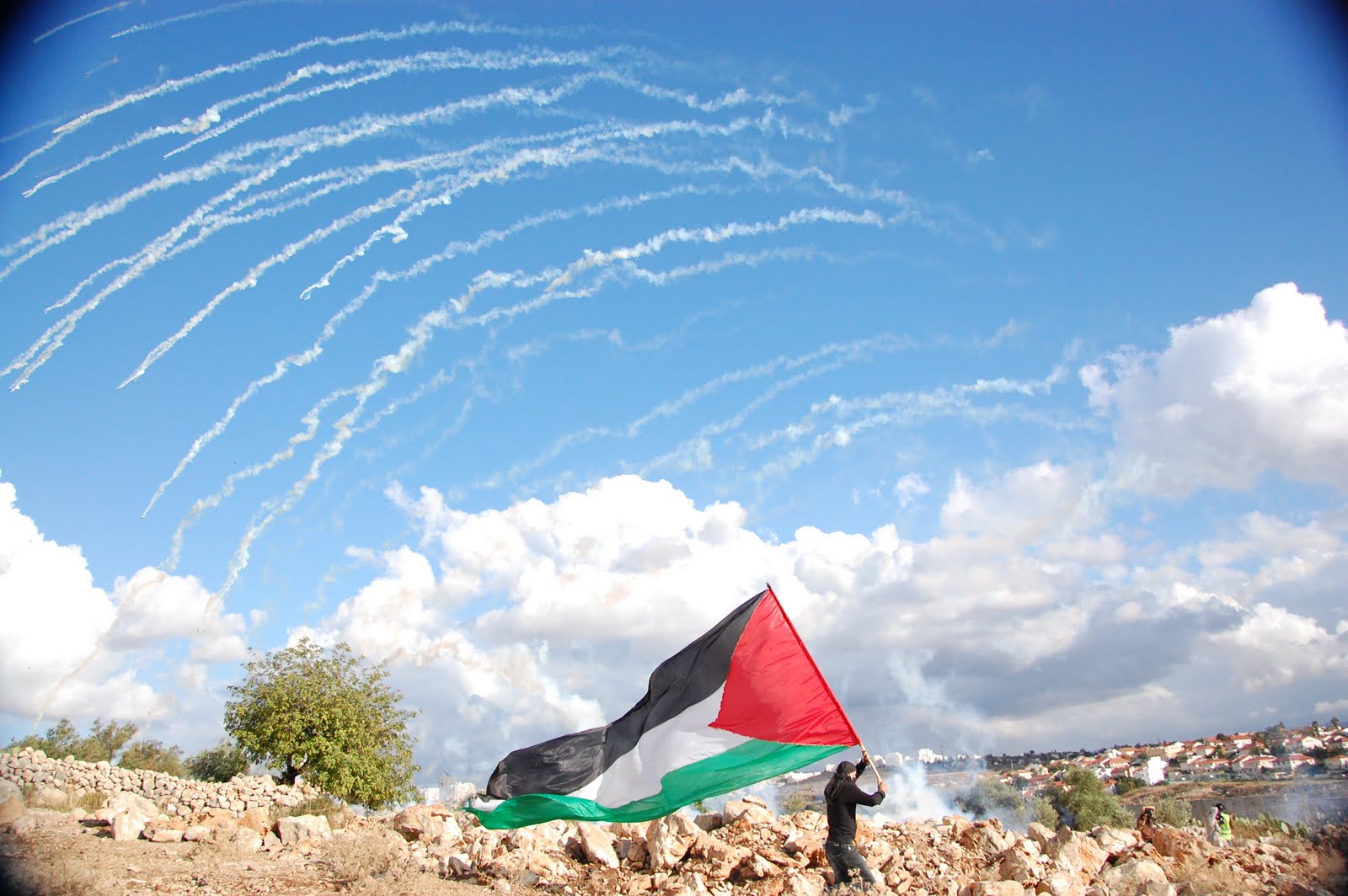
Last week the village of Nil'in continued to protest against the Israeli occupation and apartheid wall. This demonstration lasted for several hours as Palestinians faced off against Israeli soldiers who fired individual tear gas rounds, gas in waves of 30+ canisters, and live ammunition against the protesters.


A man is fenced off from his land by the Israeli military.

Tear gas streaming over the apartheid wall.
A resister slings stones over the wall while overlooking a tire fire and tear gas.

A Red Crescent medic looks out across waves of falling tear gas.

Resistance fighter being carried to the ambulance after being shot.

Monday, November 16, 2009

Ni'lin's Resistance Against Occupation

This week I traveled to Ni'lin, a very dangerous village where residents are fighting for their freedom from occupation. Anyone who protests here faces more than just rubber bullets*, concussion grenades, skunk**, and military vehicles that lob tear gas into crowds in giant waves. The Israeli Defense Force shoots metal tear gas canisters directly at the heads of protesters. The canisters, which are meant only to be shot in the air, have killed and wounded many and continue to harm more each year. Using the tear gas canisters as they do gives protesters little time to dodge their path, but is still not as bad as when they use live ammunition to disperse crowds of demonstrators.

When a real bullet is fired directly at you there is no time to react, you will be hit before you even hear the shot's echo through the air. If you are lucky enough to hear the sharp whistle of a bullet flying past your head or the loud snap on a rock as the bullet impacts it a few feet away instead of feeling the bullet hit you, all you can do is run for cover and hope that their aim is off. You cannot fight bullets with your skin & bones. This fight goes on for hours as resistance fighters and photographers duck and dive behind rocks, olive trees or ditches in the ground to find cover. The IDF shoots at anyone with the Palestinians, sending a message to others who may want to join the resistance; their lives will not be of any more value than the Palestinians.

Towards the end of the struggle I found myself trapped in an olive grove with a few fighters. The rest of the demonstrators had been badly tear gassed and pulled back up the hill, leaving us in between the clouds of gas and the military. As we pulled back, ducking from tree to tree the military opened fire. I could hear the bullets zooming past as I looked for places to hide, I was fortunate enough to make it out uninjured, but the man next to me wasn't as lucky. Red Crescent medics showed up quickly to take him out on a stretcher, the military continued to fire upon the medics. It took a minute or two of making our way through bullets, gas and rocks before the injured fighter got to further help. To the freedom fighter, I wish I could have done more and I am sorry that I was only able to document your suffering with my camera.

* Rubber bullets are actually metal bullets covered in rubber

**Skunk is a liquid mace that smells worse than a burst septic tank


The resistance continues to pushes forward through the tear gas.

Resistance fighter takes cover from fire behind an olive tree.

Portrait of child fighter struggling for freedom.

Waves of tear gas engulf the field.

Palestinians use stones as their weapon against the Israeli military.

Red Crescent medics carry away a resistance fighter after being shot.

Tuesday, November 10, 2009

Tearing Down the Israeli Apartheid Wall in Occupied Palestine

Yesterday marked the 20th anniversary of  fall of the Berlin wall. In occupied Palestine, Palestinians and internationals decided to honor this event by tearing down a section of their apartheid wall in Qalandiya, which cuts off Palestinians from entering into Jerusalem. I was fortunate enough to be an observer with my camera and was able to capture the fall of this wall which has been one of the proudest moments in my life.

I am also posting a link to the video of the event, filmed by my good friend and 'brother', Haitham Al Katib.

http://www.youtube.com/watch?v=MaBpvauMFLU

Scaling the apartheid wall.
Palestinian and international activists tearing down the wall.
The fall of the Israeli apartheid wall!
Victorious activist celebrate in the breached wall before rushing into Israeli territory. 

Monday, November 9, 2009

20th Anniversary of the Berlin Wall & The Fall of Borders?

With today being the 20th anniversary of the fall of the Berlin Wall I thought it would be important to address the issue of borders. Living in a region where apartheid and occupation is still thriving, it is hard for me to celebrate Berlin’s freedom like the rest of the world. All of the media coverage on the event that took place 20 years ago makes it seem as if that was the end of all apartheid walls. Of course, this is complete rubbish as most of us know because today there are more walls and borders than ever before. The following images are photographs I gathered to show the constant use of apartheid walls in our world and only the last photograph was taken by me. Some of these barriers have fallen, some are still standing strong but it is common knowledge that eventually all walls, no matter how tall, will come crashing down.
Berlin Wall, Germany.
The wall that separates Ireland from English occupied N. Ireland
The 'security wall' cutting through the city of Baghdad, Iraq.
The border wall that separates America from Mexico.

The apartheid wall that surrounds the West Bank, occupied Palestine

Friday, November 6, 2009

A Letter from the West Bank


Daytime in Bil’in is fairly quiet. It is mostly spent working on projects (for those who are fortunate enough to be employed), saying hello to friends in shops and street corners with a lot of free time to drinking tea and coffee. At night, when people are sleeping, is when the violence breaks out. Every night a group of Palestinians & solidarity workers gather on the roof tops, staying awake to watch for military raids. Most of the peace workers travel during the day where foreign presence is necessary and return at sundown for night watch in Bil’in.

However, this particular day was different. Around 4 p.m. I was in a house doing my spinal stretches, (trying to keep my back in tact so I can stay here as long as possible), when a man ran in yelling, “soldiers, soldiers!” I ran outside, when I reached the rooftop I saw a convoy of military vehicles had passed through the apartheid wall. They were speeding down the road to the village; an immediate sense of fear and urgency griped my throat and head. What could I possibly do to stop a military invasion!? All I could think of was to grab my camera and sprint to the streets. I have learned in a few weeks here to trust that my instincts will guide me in the right direction.

After attaining information from the people running in the streets, I figured out where they will enter the village from. I can hear the roar of the engines growing louder, they will arrive soon. I realize that the other international Lorenzo from Italy, is still unaware of what is about to happen and is on the street where the soldiers will soon enter. I run down the street to a chorus of people yelling “la! la! la!” (“no! no! no!”). I continue to run anyways because I fear what might happen to him; this is his first day in Palestine, he arrived only 3 hours ago. I get to the room where he is checking his email and tell him there are soldiers coming. We sprint back to the street where humvees armored to the teeth and with metal rods stretching across all the windows to protect against rocks are arriving. The last humvee is that of the Shibak, the Israeli secret police. All I can do is take photos and hope that my international presence will be of some help. 

Once they fly past I run through the streets choked with smoke from burning tires and other flammable objects. Children yell insults at the soldiers as they hurl rocks from the streets and rooftops. This is the only way they can resist the occupation that illegally holds them prisoner in their own homes, but also threatens to occupy their minds and dreams. Exhaustion has been taking over my body, but it is no match to the adrenaline, which seems to override everything. Oxygen that burns like a oven’s heat, shoots from my lungs, my heart teeters on the edge, threatening to bursting as it pumps battery acid through my veins. Families barricaded inside their houses cheer me on as they look out their window and see me running through alley ways to catch up. Luckily the resistance in the village, and hopefully the international presence, deterred the soldiers. They had to pull back across the wall. 

It seems like a small victory when the people in the village yell “welcome!” and smile widely as I walk back through the streets. That night everyone stands on edge during the watch, waiting for the roar of the engines to return with truck lights coming across the dark horizon. Every time we see the flares from an Apache helicopter light up the night our hearts skip a beat, relaxing only when the light goes out without hearing gunfire. That night nothing else came. The other peace workers return and take over; I finally get to sleep for a solid 4 hours.

When I wake, a strong wind blows through the morning sky and we embrace the first rain of the year. The air is crisp and the rain is cool as we all stand outside letting it soak into our skin. When the clouds pass the warm sun returned and the fresh smell of the land rises up to engulf the village. The rest of the day is peaceful so Eric (a Scottish activist) and I take the time to have a wonderful Middle Eastern sunbath on a rooftop. 

By sundown the atmosphere returns to a state of tension. The town next to us engages in conflict. There is no international presence in that village and we receive no word on what is happening. We can only prepare for the defense of Bil’in as we look across the land at the besieged village, with thick black smoke rising from behind the mosque. Finally, a call for people to help with the town’s resistance comes through, but the connection cuts out before finishing the message. We get no more messages from the village and all we can do is look out, fearing what the people are going through, as the sound of several explosions echo across the hills. Over time, everything becomes quiet and the land returns to its state of stillness, the day brings a quieter atmosphere. 

The next night storm clouds return, lightning and thunder crack over us and we are back to waiting for the next invasion to occur. This is how life is under occupation. The Palestinians that live here have no choice for action or change. I wait with them; we come from all around to stand in solidarity, as they try to live under the fear of the Israeli occupier; who rule on their own terms, with no regard for Palestinian life.

I have made it through this far without being hurt. Having no time to think in most situations, I have my instincts to thank for that, but I can only think about how long this streak of luck will last. Perhaps this is a common feeling for someone going through their first war experience, but sometimes I get a heavy feeling. It covers me like a thick blanket and the fear that I will not make it back suffocates me. I do not know what is going to happen tonight or any other time, and it is a weight that makes me want to cry and give up. I am scared. 

Yet, through this all, I am finding a strength inside that was hiding; the strength all living things posses to endure, to hold on to love, even when surrounded by hardship. To resist extinction and have the resilience to live life and never give up.

Thursday, November 5, 2009

Introduction to Al Khalil - Hebron

I am about to release a series of photographs from the occupied city of Hebron which is currently one of the most violent areas in the occupied West Bank. The city itself has been divided into two sections. H1- which is controlled by the Palestinian Authority and is relatively peaceful, and H2 - which includes the old city is STRICTLY controlled by the Israeli military and illegal settlers. In this section of this city (H2) there are countless house raids, military patrols through the old city and 500 very violent  settlers with 5 soldiers to every 1 settler! Palestinians are forbidden to walk down many streets and are detained for hours on end with over 100 checkpoints throughout the H2 section.

In the coming weeks I will be focusing on the issue of this beautiful city as it is being strangled to death by occupation. Until that time, here are some photographs to get you anxious for my upcoming project.

Palestinians use fencing to protect themselves from settlers attacking them with objects from above, occupied Hebron.

Inside an Israeli checkpoint.   Old City, Hebron

Wednesday, November 4, 2009


Caterpillar machines are used to destroy Palestinian houses, farms on an almost daily basis.

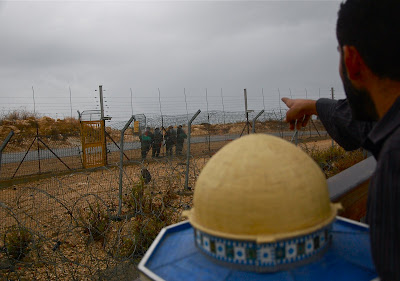
A man looks out across the stolen & occupied land of the West Bank towards the apartheid wall.

Friday, October 30, 2009

Bil'in's Struggle for Freedom: Part 2

The violence in Al Aqsa mosque has spread through the West Bank.
Protesters in a stand of with IDF soldiers.

Tear gas covers the field and chokes everyone in it.

Wednesday, October 28, 2009

Military convoy and occupied homes in Jerusalem.

Military convoy enters the village of Bil'in.
The grave of Bassem who was shot & killed during a protest in Bil'in.
Jewish settlers forcibly occupy a Palestinian home in Sheikh Jarrah, Jerusalem. 

Settlers claim that the house & land was given to them by god.

Friday, October 23, 2009

Bil'in's Struggle for Freedom: Part 1

Every Friday at noon, the village of Bil’in stages protests and resistance to the Israeli occupation and apartheid wall. The demonstration, consisting of local villagers and foreign peace workers, almost always ends with tear gas, concussion grenades and in some events rubber bullets. Here things can turn violent quickly and have, in the past, ended in civilian deaths.


These are the first photographs from a series that I will be posting from the resistance protests in the village.


Boycott, Divest & Sanction.

Cutting the fence under a sniper's watch. 

Foreign peace workers join in solidarity with the Palestinians.

Breaking borders.

Protesters in a stand off with the military.

Solidarity workers.

Endless volleys of tear gas is the main technique to break up the protests.

Youth use stones to fight off the highly equipped military.

Protester in a fight with an armored Israeli vehicle.

Teenager resisting occupation by slinging rocks at the IDF (Israeli Defense Force).

Fighting back.